Foundations Built on Controlled Drainage Slopes
Rough grading in Hudson for building sites that require drainage compliance and stable base preparation
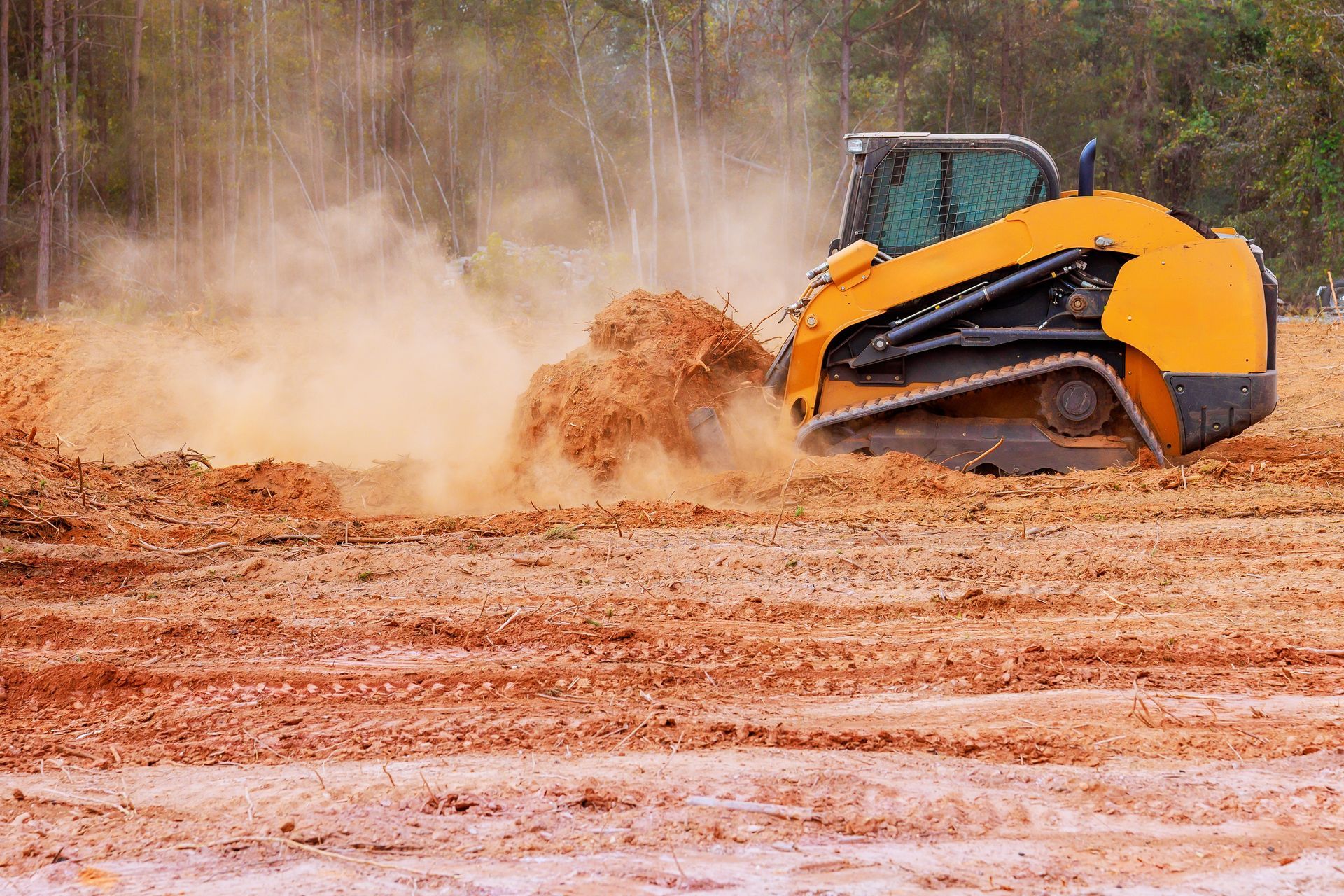
Florida's clay and sandy soil layers, variable elevation across rural lots, and wet-season drainage requirements mean that rough grading determines whether a building site channels water away from foundations or traps runoff in low spots that erode footers and saturate crawl spaces. H&R Landworks grades raw land and lot sites for building, drainage, and foundation prep across Hudson and Pasco County, cutting high spots and filling depressions to establish the slope required by local code and the elevation needed for footer placement and stormwater flow.
The process involves setting grade stakes to match engineered plans or drainage requirements, removing topsoil and vegetation from the building envelope, cutting or filling to achieve the target elevation, and compacting the base so it supports structural loads without settling. In areas where sandy soils drain quickly, grading focuses on directing sheet flow away from the structure, while clay-heavy zones require steeper slopes and sometimes subsurface drainage to prevent pooling.
Request a site consultation to review elevation surveys and grading specifications for your building plan.
Why Slope and Compaction Define Long-Term Stability
Grading work begins after clearing and stump removal, when operators use grade stakes or laser levels to establish the desired slope—typically a minimum two percent grade away from the building footprint to ensure water moves toward drainage swales or retention areas. Equipment removes or redistributes soil in lifts no thicker than twelve inches per pass, and each lift is compacted before the next layer is added, preventing voids that later collapse under the weight of concrete slabs or cause uneven settling beneath driveways.
Once grading is complete, you will notice a level pad for the building footprint with positive drainage away from all sides, no standing water after moderate rain, and a compacted surface firm enough to support construction equipment without rutting. Stormwater flows predictably toward designated collection points rather than pooling near foundation lines or eroding soil from beneath poured slabs.
Rough grading includes site clearing within the building envelope, cut-and-fill operations to match elevation plans, and compaction of the base layer. It does not include topsoil replacement, final finish grading for landscaping, or installation of subsurface drainage systems unless specified in the project scope and coordinated with separate drainage contractors..
What Property Owners Ask About Site Preparation
Landowners preparing for construction in Hudson and surrounding counties often ask about drainage requirements, timing, and how soil conditions affect grading decisions.
What slope is required for proper drainage in Hudson?
Local code typically mandates a minimum two percent slope away from structures, meaning the ground drops at least two inches for every ten feet of horizontal distance, though clay soils and areas with poor natural drainage often require steeper slopes to prevent water from pondering during Florida's summer storm season.
How is compaction verified during rough grading?
Operators compact soil in lifts using the weight and vibration of the equipment, then check firmness by observing whether machine tracks sink more than an inch under load; sites with engineered foundations may require third-party compaction testing to confirm the base meets specified density before footers are poured.
When should rough grading be completed relative to construction?
Grading should finish before foundation contractors arrive, allowing time for the base to settle naturally through at least one rain cycle so any soft spots or drainage issues show up before concrete is poured rather than after walls are framed.
What happens if elevation plans conflict with existing drainage patterns?
Grading contractors adjust cut-and-fill operations to balance engineered elevations with natural water flow, sometimes adding swales or adjusting slopes to redirect runoff without creating erosion or pooling on adjacent properties.
How does soil type in Pasco County affect grading methods?
Sandy soils compact quickly and drain well but erode easily if slopes are too steep or runoff is concentrated; clay soils hold water longer and require flatter slopes or subsurface drainage to prevent saturation, and mixed soils need grading plans that account for both permeability and stability.
H&R Landworks grades building sites across rural Pasco County where drainage compliance and stable base preparation determine long-term foundation performance. Schedule a property evaluation to discuss grading requirements and site-specific soil conditions.