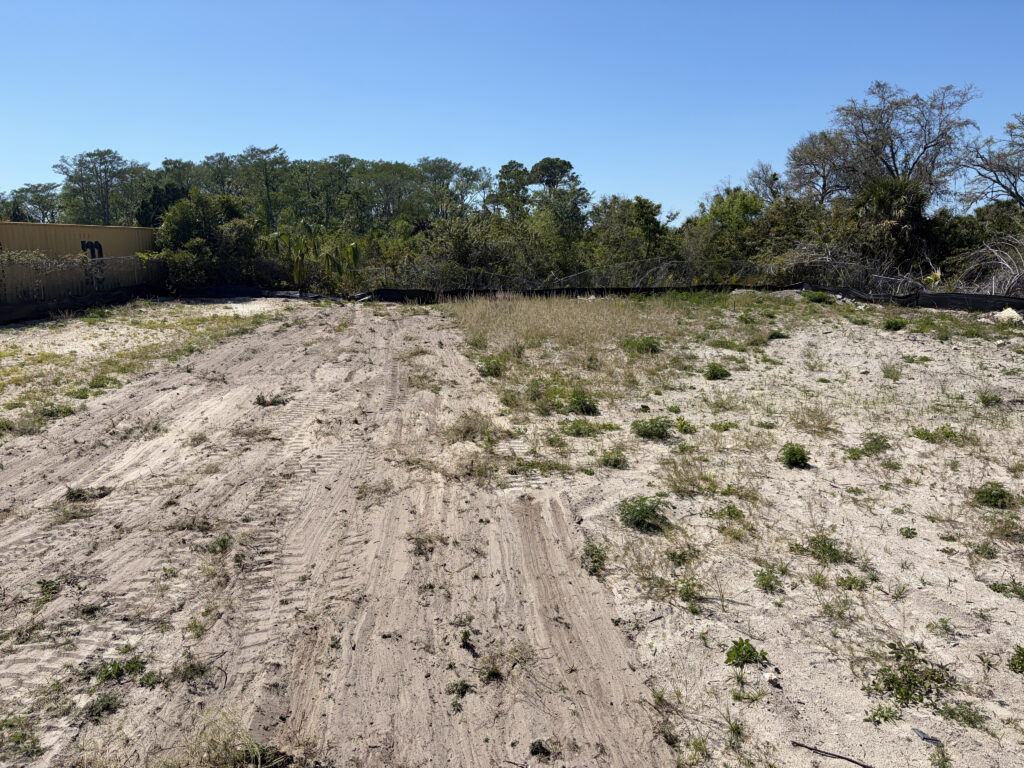
Land clearing is the first step for nearly any major outdoor project — and getting it right determines everything that follows. Whether you’re building a home, expanding a farm, or transforming a neglected lot into something usable, knowing what land clearing involves, which method fits your property, and what it actually costs will save you time, money, and serious headaches. Here’s a direct answer to start: land clearing typically costs between $1,000 and $5,600 per acre in 2025–2026, takes anywhere from one day to several weeks, and almost always requires at least one permit before equipment rolls onto your property.
This guide covers everything from the core clearing methods and equipment used to real cost breakdowns, timelines, and the permit questions most property owners forget to ask.
What Is Land Clearing — and Why Does It Matter?
Land clearing is the process of removing trees, stumps, brush, rocks, debris, and other vegetation from a property to make it usable for construction, agriculture, landscaping, or general improvements. It’s not just “cutting stuff down.” A proper land clearing job also accounts for root systems, soil stability, drainage flow, and what happens to all the debris once it’s removed.
Did You Know: Skipping root and stump removal is one of the top reasons new construction sites experience foundation shifting and drainage failures within the first two years. The visible work is only half the job.
What you’re left with after clearing directly affects every phase of your project. Poorly cleared land leads to uneven grading, poor drainage, erosion, and costly rework. Done right, a cleared site gives your contractor a stable, workable canvas — whether that’s a foundation pour, a lawn installation, or a new access road.
The scale and goals of your project determine everything: which clearing method makes sense, what equipment is needed, how long it takes, and what permits are required. Let’s walk through each of those in order.
The Main Land Clearing Methods Explained
There’s no single right way to clear land. The best approach depends on your lot size, the type and density of vegetation, the terrain, and what you plan to do with the property afterward. Here are the five primary methods professionals use.
Mechanical Clearing
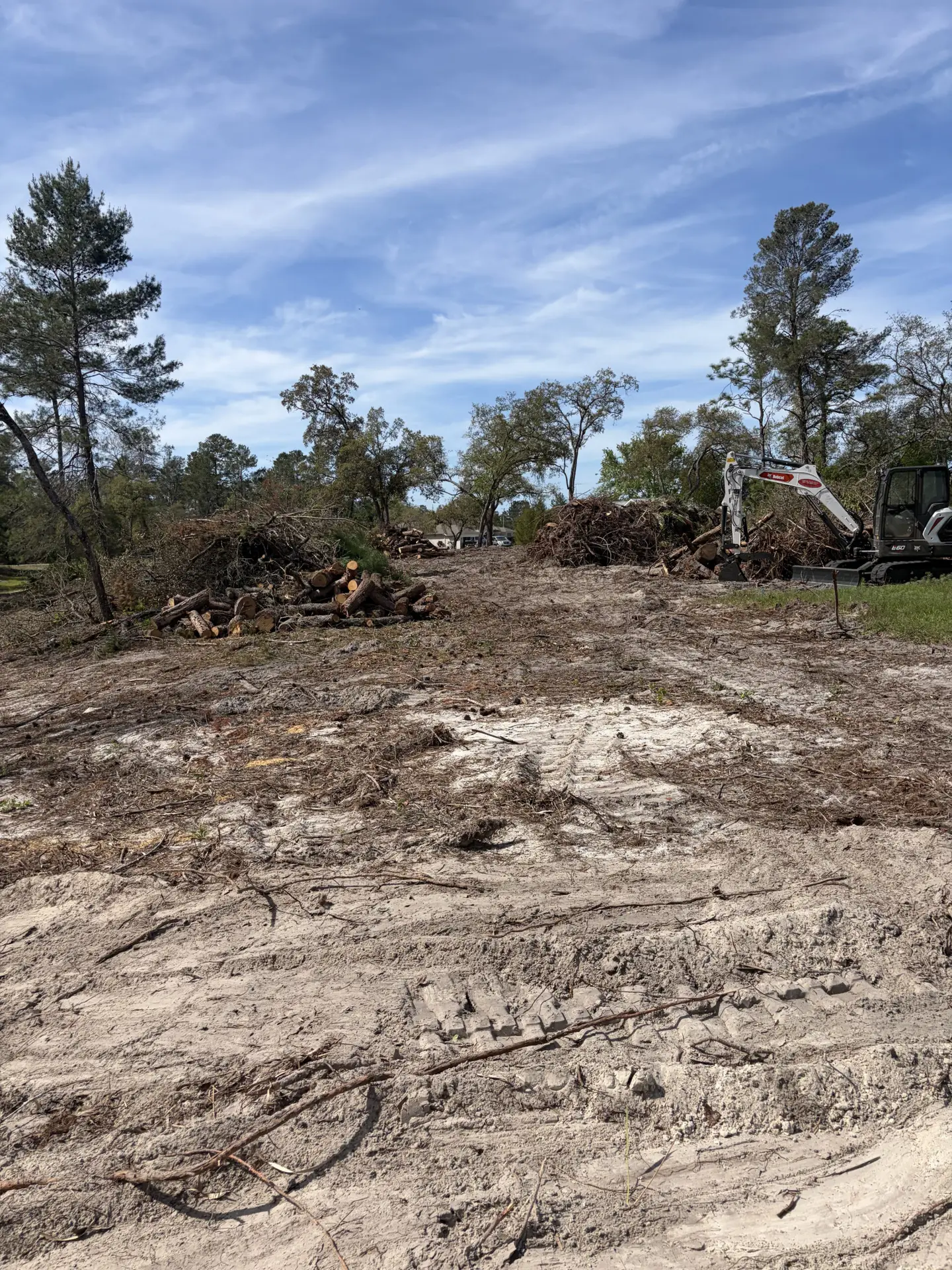
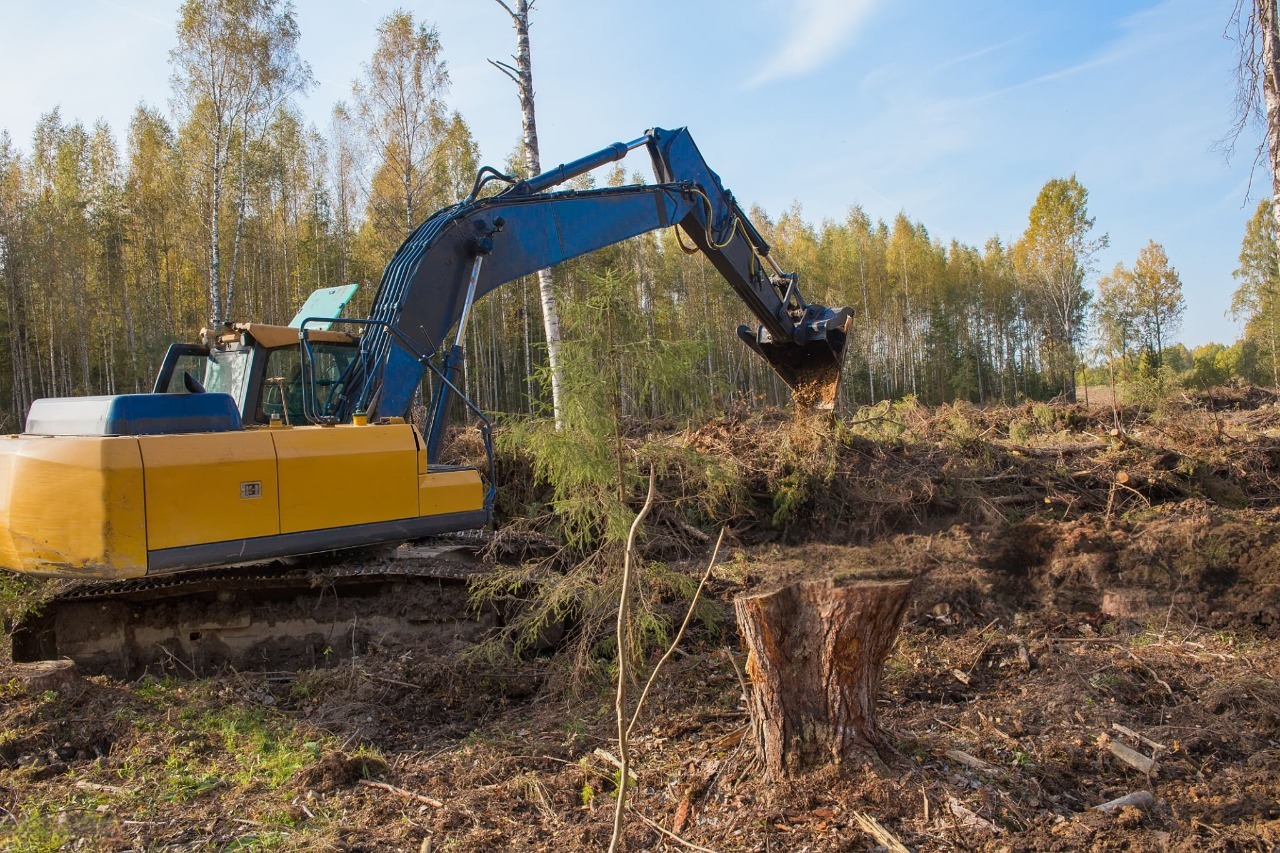
Mechanical clearing uses heavy equipment — bulldozers, excavators, skid steers, and mulchers — to remove trees, stumps, brush, and debris efficiently. It’s the go-to method for most residential and commercial sites because it’s fast, thorough, and scalable.
For a lot with mature hardwoods, a bulldozer pushes them out root and all. An excavator with a hydraulic thumb picks up logs and places debris into piles for chipping or hauling. A skid steer handles smaller brush and tight spaces where a full-size dozer can’t maneuver.
Mechanical clearing works well for lots ranging from a quarter acre to hundreds of acres. The trade-off is soil compaction — heavy equipment presses down on the ground, which can affect drainage and root growth afterward if the site isn’t properly graded and decompacted. A good contractor factors this into the process.
Best for: Medium to large lots, dense vegetation, construction site prep, lots where speed matters.
Forestry Mulching
Forestry mulching is one of the most efficient — and increasingly popular — clearing methods available. A single machine called a forestry mulcher grinds trees, brush, and stumps directly into a layer of wood mulch that gets left on the ground.
The result is a cleared lot with a mulch blanket that reduces erosion, retains soil moisture, and decomposes into organic matter over time. There’s no debris to haul, no burn piles to manage, and far less soil disturbance compared to bulldozing.
Pro Tip: If you’re clearing land you plan to seed or plant within six to twelve months, forestry mulching is often the smarter call. The mulch layer protects topsoil and breaks down into nutrients — rather than stripping your land bare and leaving it vulnerable to erosion and runoff.
Forestry mulching does have limits. Most residential-grade machines handle trees up to 6–8 inches in diameter efficiently, while larger commercial units can process trees up to 10–12 inches. Very large hardwoods are typically felled first, then mulched. The method is also not ideal for rocky terrain, as stones can damage mulcher teeth and become projectiles.
Best for: Selective clearing, lots near waterways or sensitive areas, properties being prepped for seed or pasture, environmentally sensitive sites.
Manual Clearing
Manual clearing involves crews using hand tools — chainsaws, brush cutters, axes, and loppers — to clear vegetation by hand. It’s labor-intensive, slower, and costs more per acre than mechanical methods, but it offers precision that machines can’t match.
This method is most practical for small areas, tight spaces near structures or utilities, or properties where heavy equipment simply can’t access. It also works well for selective clearing — removing specific trees or brush while leaving others intact.
Don’t expect manual clearing to be cheap just because it avoids big machines. Labor costs add up fast, and a crew working by hand on a heavily overgrown half-acre can take as long as a full day.
Best for: Small lots, properties with access restrictions, selective clearing, areas near existing structures or utilities.
Chemical Clearing
Chemical clearing uses herbicides to kill unwanted vegetation. It works best on grass, weeds, and light brush — not large trees or heavy undergrowth. After the herbicide is applied, vegetation dies off over days to weeks, and the dead material either gets removed mechanically or left to decompose.
This method is slow and requires follow-up. It’s also subject to weather — rain too soon after application reduces effectiveness — and it carries environmental considerations, especially near water sources. In many jurisdictions, applying certain herbicides near waterways or wetlands requires specific permits or licensed applicators.
Best for: Weed and grass suppression, secondary clearing after mechanical removal, maintaining previously cleared areas.
Controlled Burning
Prescribed burning — intentionally setting fire to vegetation in a managed way — is used primarily in rural, agricultural, and forestry settings. It’s not a common residential option and requires permits from your local fire authority and often state forestry agencies.
When done right, controlled burns clear large amounts of biomass quickly and can actually improve soil fertility by returning nutrients through ash. When done wrong, they’re a liability and a hazard.
Best for: Large rural properties, agricultural land, forestry management — not recommended for residential lots.
Land Clearing Costs: What to Expect in 2025–2026
Land clearing cost ranges vary significantly based on lot size, vegetation density, terrain, and method. Here’s a real-world breakdown.
| Scenario | Cost Range Per Acre |
| Light brush and grass | $500 – $1,500 |
| Mixed brush and small trees | $1,500 – $3,000 |
| Dense woods and mature timber | $3,000 – $5,600+ |
| Forestry mulching (all-in) | $1,200 – $3,500 |
| Manual clearing (per acre) | $2,000 – $4,500+ |
Did You Know: Labor and equipment account for over 60% of total land clearing costs on most residential and agricultural projects. The remaining costs go to debris disposal, permitting, and site preparation services like grading and erosion control.
These ranges represent national averages. Your actual quote depends on several key factors.
Lot size and vegetation density. An acre of lightly wooded land costs far less to clear than an acre covered in mature oaks with deep root systems. Contractors evaluate density before pricing.
Terrain and access. Steep slopes, rocky ground, and poor equipment access all raise the cost. A lot that a bulldozer can reach from the road is much cheaper to work than one requiring equipment to be transported over rough ground.
Debris disposal. What happens to the material after it’s cleared matters. On-site chipping or mulching is the most cost-effective option. Hauling debris to a disposal site adds $200–$600 per load. If burning is permitted in your area, it can reduce hauling costs but requires a permit and increases project complexity.
Stump removal. Stump grinding runs $120–$400 per stump for most residential trees, with extra-large hardwood stumps pushing $800 or more. If you need them gone — especially for construction — build this into your budget up front rather than treating it as an afterthought.
Additional site preparation. After clearing, you may need grading, erosion control measures, soil testing, or a land survey. These services are often coordinated through the same contractor but add to the total project cost.
Pro Tip: Always request an itemized quote. A quote that simply says “$X to clear your lot” doesn’t tell you what’s included — debris removal, stump grinding, and erosion control measures are frequently left out of base prices and added as change orders later.
How Long Does Land Clearing Take?
Timeline depends on lot size, vegetation density, method, crew size, and weather. Here’s a general framework.
A small residential lot under half an acre with light to moderate brush can typically be cleared in one to three days by a professional crew using mechanical equipment.
A quarter- to one-acre lot with heavier vegetation, mature trees, or access challenges usually runs three to seven days, including stump grinding and debris removal.
Multi-acre properties — think five acres of dense woods — can take one to three weeks depending on the method. Forestry mulching, which eliminates debris piles, often moves faster per acre than conventional bulldozing and hauling.
The permitting phase adds time before any equipment arrives. Permit applications can take anywhere from a few days to several weeks depending on your municipality and whether wetlands or protected areas are involved. Factor this into your project schedule before you set a construction start date.
Did You Know: Weather can add days or even weeks to a clearing project in some regions. Heavy equipment bogs down in saturated soil, and wet conditions on sloped lots create erosion risks that responsible contractors won’t ignore. Spring thaw and prolonged rainy seasons are the most common timeline disruptors.
Permits: What Most Property Owners Don’t Ask About
One of the most common surprises in the land clearing process is the permitting requirement — and the delays that come with it when property owners don’t account for it early.
Here’s a direct answer: in most areas, yes, land clearing requires permits, especially if you’re removing trees above a certain diameter, working near a waterway or wetland, disturbing more than a set amount of acreage, or generating stormwater runoff that flows off your property.
The most common permits include:
Land Disturbance or Grading Permit. Required in most municipalities for any significant site work. It ensures your project meets local erosion control and stormwater management requirements.
Tree Removal Permit. Many counties and cities regulate the removal of trees above a certain size — often 6 to 12 inches in diameter at breast height — especially near waterways, within conservation areas, or on heritage tree lists.
Burning or Disposal Permit. If any debris will be burned on-site, you’ll need approval from your local fire authority and sometimes state forestry agencies. This requirement is separate from the land disturbance permit.
Wetlands or Environmental Review. If any portion of your property is within or adjacent to a wetland, floodplain, or navigable waterway, you may need review from your state environmental agency or a federal Section 404 permit from the U.S. Army Corps of Engineers. This process can take weeks to months.
Failing to secure proper permits results in stop-work orders, fines, and sometimes mandatory site restoration at your expense. A reputable land clearing contractor will identify permitting requirements during the initial site assessment and either handle the applications directly or walk you through the process.
Pro Tip: Ask any contractor you’re considering this specific question before hiring: “Which permits will this project require, and will your team handle the applications?” Their answer tells you a lot about their experience and how the project will actually be managed.
The Land Clearing Process: Step by Step
Understanding the process from first call to finished site helps you ask better questions, set realistic expectations, and avoid surprises.
Step 1: Site Assessment. A qualified contractor walks your property to evaluate vegetation type and density, access, drainage, soil conditions, and any environmental concerns. This is where your project scope and estimate get built.
Step 2: Permitting. Based on the assessment, permit applications are submitted and approved before any equipment arrives. Don’t rush this phase — it protects you legally and ensures the work is done in compliance with local codes.
Step 3: Clearing and Removal. Equipment mobilizes and systematic clearing begins. Trees are felled, brush is removed, stumps are ground or pulled, and debris is processed — chipped, hauled, burned, or mulched in place depending on the method selected.
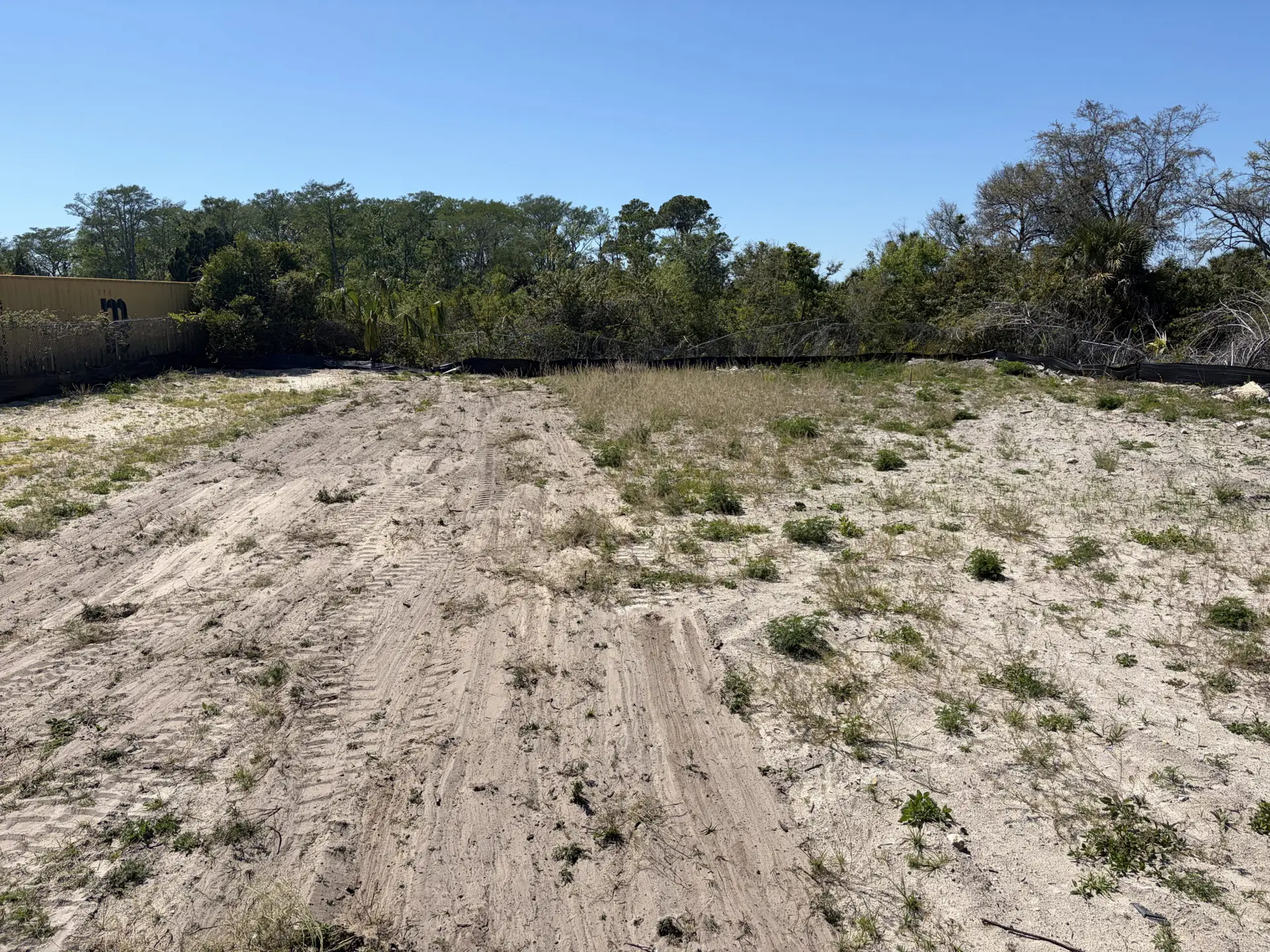
Step 4: Grading and Erosion Control. Cleared land is graded to establish proper drainage flow and compacted to create a stable surface. Erosion control measures — silt fences, straw wattles, or seeding — are installed per permit requirements to prevent sediment runoff.
Step 5: Final Inspection. The site is reviewed for compliance, cleaned up, and handed off ready for the next phase — whether that’s foundation work, landscaping, agricultural use, or a new driveway.
How to Choose a Land Clearing Contractor
The clearing contractor you hire sets the foundation — literally — for your entire project. Here’s what to look for and what to verify before you sign anything.
Licensing and insurance. At minimum, your contractor should carry general liability insurance (typically $1 million or more) and workers’ compensation. Ask for proof of both before work begins.
Equipment ownership vs. rental. Contractors who own their equipment typically have more control over scheduling and lower overhead than those who rent. Ask what machines they’ll bring and whether they own them.
Permitting experience. A contractor who handles permits regularly knows the local requirements, the timelines, and the agencies involved. First-timers in your area may underestimate what’s required — or skip steps.
Itemized proposals. Any serious contractor provides a written proposal that breaks down scope, method, debris handling, stump treatment, and timeline. Avoid contractors who quote verbally or refuse to itemize.
References from similar projects. Ask for references specifically from clearing jobs similar to yours in size, terrain, and scope. A contractor who handles commercial land clearing may not be the best fit for a residential lot clearing job, and vice versa.
Frequently Asked Questions
What is the cheapest way to clear land?
Forestry mulching often delivers the best cost-to-value ratio for residential lots because it eliminates debris hauling entirely. For small areas with light brush, manual clearing can be affordable — but costs rise quickly as lot size and vegetation density increase.
Do I need a survey before land clearing?
A boundary survey is strongly recommended before clearing begins. It confirms property lines so equipment doesn’t accidentally clear onto a neighbor’s land — a problem that can lead to legal disputes and costly remediation.
Can I clear land myself?
Small areas with light brush can be DIY-managed with the right tools and safety gear. However, anything involving large trees, tree removal near structures, significant acreage, or permit requirements should be handled by licensed professionals. The risk of injury, property damage, and code violations is too high to cut corners.
Will land clearing kill my topsoil?
It can, if done carelessly. Bulldozing strips topsoil along with vegetation. Forestry mulching is significantly gentler on soil structure and leaves organic matter behind. If soil health matters for your plans, discuss the method with your contractor before selecting it.
How long after clearing can I build?
It depends on what the land clearing included and what comes next. If grading and compaction are done properly as part of the clearing process, a site can typically support construction within days. If significant root systems remain or the soil needs stabilization, additional site prep may be required.
What Comes After Land Clearing?
Clearing is step one — not the finish line. Depending on your project goals, you may need grading and excavation to level the site and establish proper drainage, sodding or seeding to establish ground cover and prevent erosion, drainage solutions like French drains or catch basins if water management is a concern, landscaping design to plan what replaces what was removed, or construction of hardscaping elements like driveways, retaining walls, or walkways.
A cleared lot without a plan for what comes next can become an erosion problem quickly — especially during wet seasons. The best outcomes come from thinking through the full scope before clearing begins, not after.
Ready to get started? Contact H&R Landworks for a free site assessment. We’ll walk your property, assess your clearing needs, identify any permitting requirements, and give you a clear, itemized estimate — no surprises, no pressure. Visit our Land Clearing page to learn more about how we work and what to expect when you partner with our team.