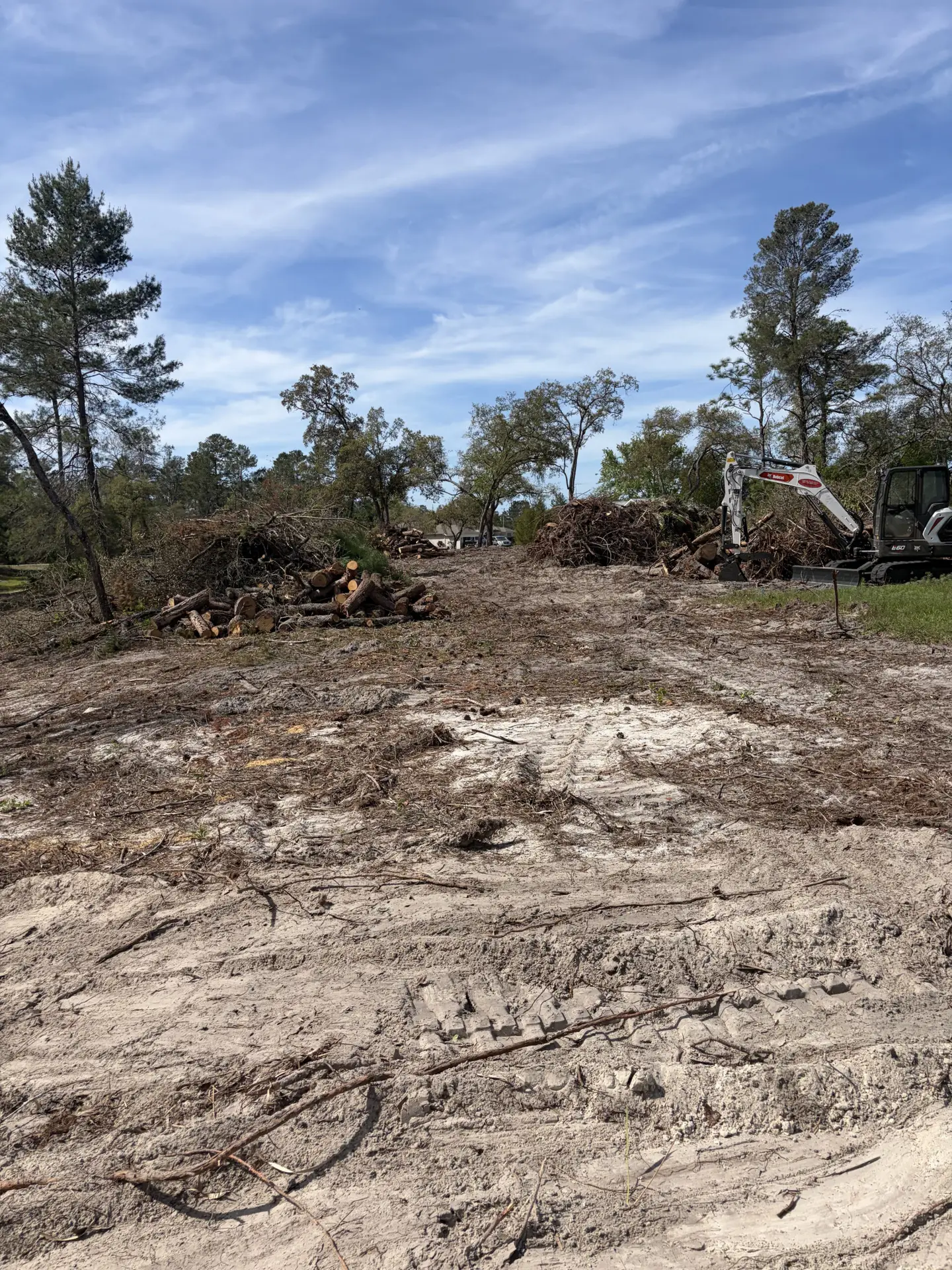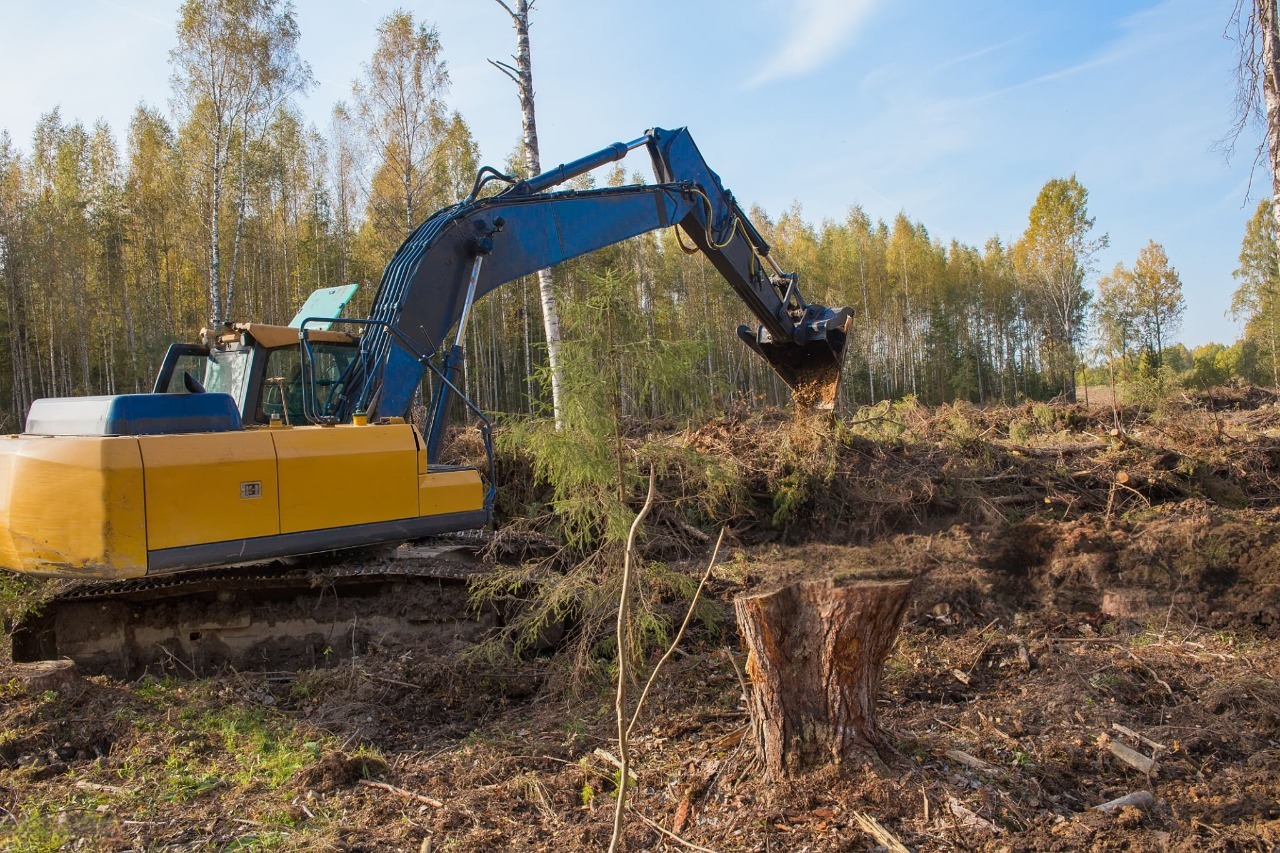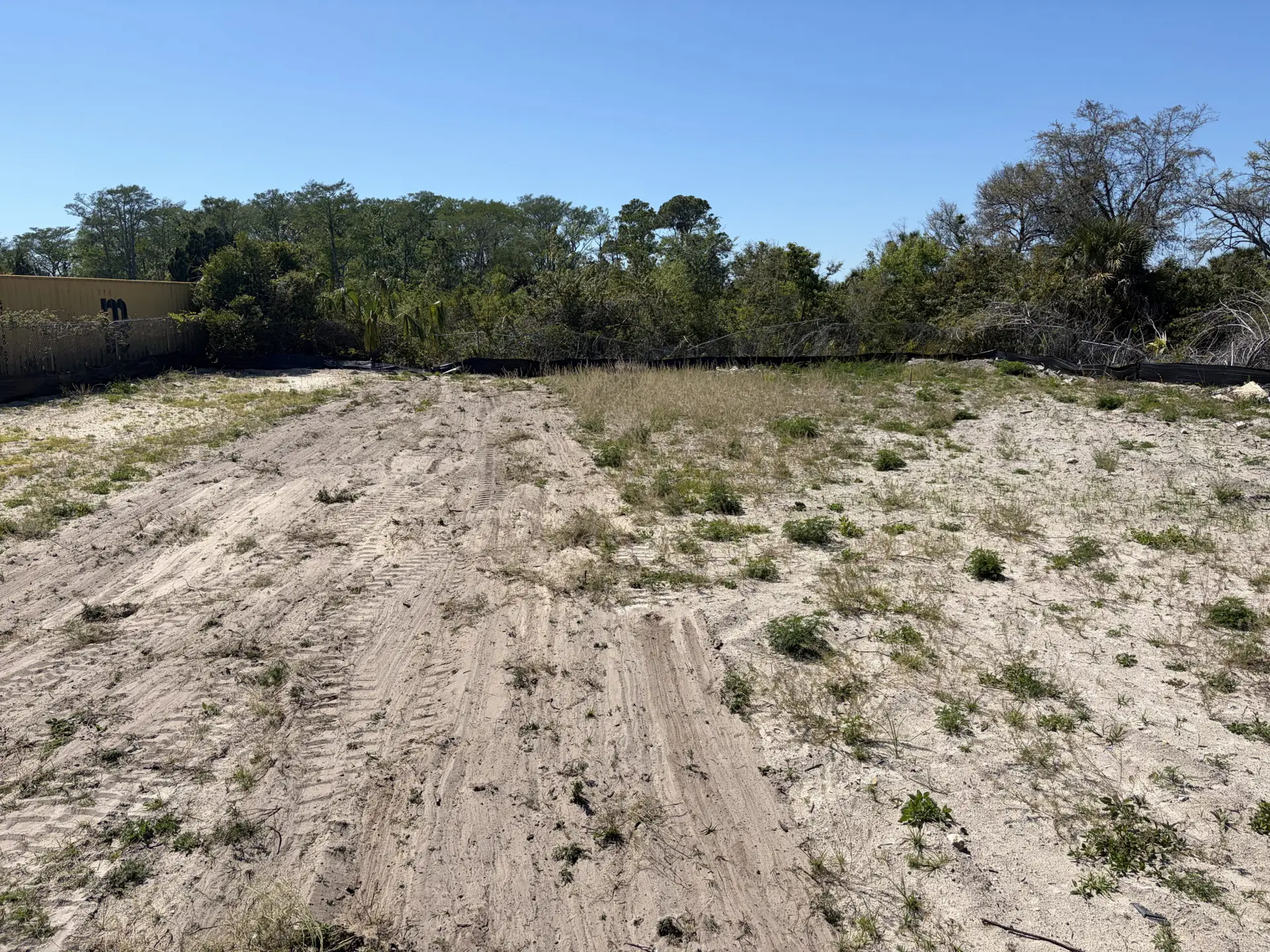
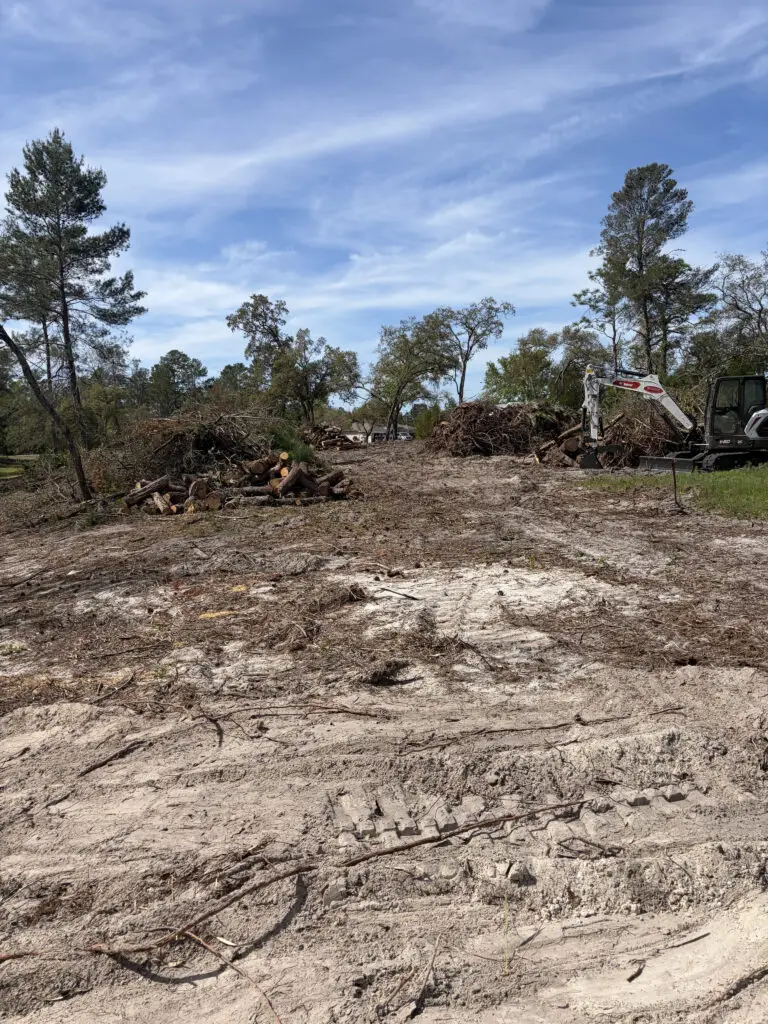
H&R’s complete land-clearing guide covers methods and costs; land clearing is more than one machine showing up and pushing trees into a pile. A good land clearing process moves in a set order: review the property, confirm the work area, choose equipment, clear and process the material, then walk the finished site with the owner.
1. Start With a Property Walkthrough
The first step is a site visit, not a chainsaw. The crew looks at the size of the work area, vegetation type, tree diameter, ground conditions, drainage, access, and any structures or utilities nearby.
What the crew looks for
A wooded lot can change from one side to the other. One section may have light brush and small trees. Another may have mature timber, wet soil, thick roots, or a narrow access point. Those differences affect the equipment, the work path, the debris plan, and the expected timeline.
The walkthrough also helps separate the area that needs to be cleared from the area the owner wants to keep. The clearing boundary should match the project purpose. Clearing more land than needed can add cost and remove useful tree cover.
Pro Tip: Mark the intended clearing area before work begins. A survey, site plan, or clearly marked boundary gives the crew a better target than a rough description such as “everything behind the house.”
Permits and protected areas
Permit rules depend on the county, property, project scope, and vegetation involved. Wetlands, protected trees, stormwater work, and other environmental conditions can change what approvals are needed. Local requirements should be confirmed before equipment arrives.
Gopher tortoises also matter in parts of Florida. The Florida Fish and Wildlife Conservation Commission’s gopher tortoise guidance explains that development work within 25 feet of a gopher tortoise burrow may require a relocation permit. The property owner should confirm the current rule for the site before clearing or grading starts.
2. Match the Equipment to the Property
There is no single best land-clearing machine. Equipment selection depends on tree size, brush density, terrain, access, soil moisture, and what should happen to the material after it is cut.
Skid steer with a forestry mulcher
A skid steer with a forestry mulching head is useful for brush, smaller trees, and tight areas where a larger machine may not fit. The mulcher cuts and grinds vegetation into smaller material that stays on the property. That can reduce hauling and leave an organic layer over the exposed ground.
Forestry mulching is not a complete answer for every lot. Large trees, heavy stumps, rocks, and construction-grade clearing may call for different equipment or more than one pass. H&R’s forestry mulching service is one option when the material and project goal fit that method.
Track loader or excavator
A track loader or excavator is better suited to larger trees, stumps, root balls, and heavier material. An excavator can work with a thumb or other attachment to handle logs and root masses. A loader can move material, shape piles, and help open an access path.
Did You Know? The equipment list can change during the same project. A skid steer may handle the first brush pass, while an excavator is needed later for stumps or large root systems.
3. Clear in Controlled Passes
Once the work area and equipment are confirmed, clearing usually starts from a defined edge and moves through the property in passes. Working in a planned direction gives the operator better control over falling material, machine traffic, and the location of debris.
The process may include cutting trees, mulching brush, removing stumps, moving logs, and opening the building or driveway area. Selective clearing requires extra care because the crew must remove target vegetation without damaging trees, fences, buildings, or utilities that stay.
Protecting the ground
Heavy equipment can rut or compact soil when it travels over saturated ground. That is why responsible scheduling matters, especially during periods of frequent rain. A weather delay can protect the finished site from drainage problems and repair work later.
The goal is not always to make every part of the lot perfectly flat. The goal is to leave the property ready for its next use, with access and drainage considered as the work progresses. If the project includes grading, the clearing plan should leave enough room for that next step.
Handling debris
The debris plan should be agreed on before work starts. Depending on the material and the property, debris may be:
- Mulched and spread on site
- Chipped and left in a designated area
- Piled for later use or removal
- Loaded and hauled away
The best choice depends on the amount and type of material, available space, local rules, and the owner’s end goal. A driveway project, for example, may need a clean corridor with no remaining stumps or large debris. A pasture reclamation project may have a different plan for organic material.
4. Finish the Area for Its Next Use
After the main clearing pass, the crew checks the work area for remaining stumps, root balls, debris, ruts, and access issues. If grading is part of the scope, the exposed ground can then be shaped for the driveway, building pad, drainage path, or other planned use.
The order matters. Clearing first gives the grading crew a cleaner surface to shape.
For projects affected by flood risk or drainage, property owners can review the FEMA Flood Map Service Center as one planning resource. A map does not replace a site-specific review, survey, or local permit decision, but it can help identify questions to raise before work begins.
Pro Tip: Ask for an itemized scope that states the clearing area, equipment, stump treatment, debris handling, grading, and final cleanup. Those details make it easier to compare proposals and avoid confusion about what “cleared” means.
5. Walk the Finished Site Together
The final walkthrough is the handoff between the clearing work and the next phase. The owner and crew review the cleared boundary, access points, remaining trees, stump height, debris location, and any areas that need attention.
H&R Landworks describes its service as an owner-operated process with a free on-site assessment, written estimate, equipment selected for the property, and a final walkthrough. That approach gives the owner a chance to confirm the result before the crew leaves and makes it easier for the next contractor to understand the site.
A finished clearing job should leave you with clear answers:
- What area was cleared?
- Which trees or features were intentionally left?
- Were stumps ground, removed, or left in place?
- Was debris mulched, piled, or hauled away?
How Long Does the Land Clearing Process Take?
A small lot with light brush may take a day or two. A wooded residential lot with mature trees, stumps, access limits, or debris removal can take several days. Larger acreage may take longer, especially when the project includes permitting, wet ground, selective clearing, or multiple equipment passes.
The physical work is only part of the schedule. Site access, permits, weather, soil conditions, tree density, and debris handling can all change the timeline. A reliable estimate should explain those variables instead of promising the same timeline for every property.
Start With a Site-Specific Plan
The land clearing process works best when the plan matches the property. A walkthrough identifies the work area. The equipment plan matches the vegetation and access. The clearing passes protect what stays. The final walkthrough confirms what happens next.
If you’re preparing property in Pasco, Hernando, Citrus, or Sumter County, contact H&R Landworks for a free site walkthrough.
Frequently Asked Questions
What is the first step in the land clearing process?
The first step is a property walkthrough. The crew reviews vegetation, access, drainage, structures, utilities, and the area that needs to be cleared before choosing equipment or setting the work plan.
What equipment is used for land clearing?
Common equipment includes skid steers with forestry mulching heads, track loaders, and excavators. The right combination depends on tree size, brush density, stumps, terrain, access, and how the debris will be handled.
Does land clearing include stump removal?
Not always. Some scopes include stump grinding or removal, while others leave stumps in place or treat them as a separate line item. The proposal should state exactly how stumps and root material will be handled.
How long does land clearing take?
Light brush on a small lot may take a day or two. Dense woods, large trees, difficult access, wet ground, permitting, and debris hauling can extend the schedule to several days or longer.
Do I need a permit before clearing land in Florida?
It depends on the county, property, vegetation, and project scope. Wetlands, protected trees, stormwater work, and gopher tortoise burrows can create additional requirements. Confirm the rules with the applicable local and state agencies before work begins.