
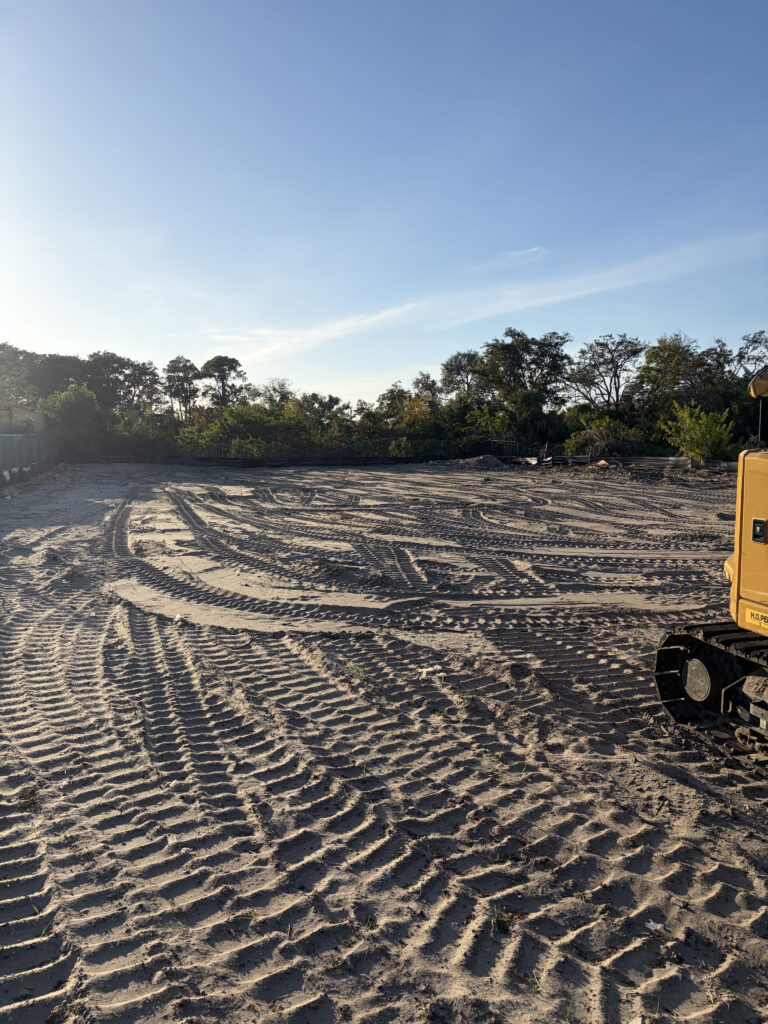
Rough grading is the step that turns a cleared piece of land into a usable, buildable site. It’s also the step that, when done poorly, creates years of drainage problems, foundation settling issues, and water intrusion. H&R Landworks provides rough grading for building pads, driveways, drainage swales, and site preparation throughout Pasco and Hernando Counties. We use a skid steer with grading bucket and blade attachments to shape land to proper elevation, slope, and drainage — done right the first time.
What Rough Grading Actually Involves
Rough grading is the process of cutting, filling, and shaping the land surface to achieve specified elevations, drainage slopes, and a stable subgrade for construction, driveway installation, or improved land use. It follows land or lot clearing and precedes final grading, compaction, and surface installation. In Florida — where the combination of flat terrain, sandy soils, and 50+ inches of annual rainfall makes drainage the primary engineering challenge on virtually every site — rough grading isn’t just about making the surface level. It’s about establishing the slopes, swales, and surface geometry that direct water away from structures, prevent ponding, and ensure the subgrade remains stable after Florida’s intense summer rain events. Common rough grading tasks H&R Landworks handles include: establishing a level building pad for a home foundation, mobile home, carport, or outbuilding; shaping the approach and crown of a driveway corridor; cutting drainage swales to direct water toward natural drainage paths; filling and leveling low spots that pond water; and preparing the subgrade surface for limerock base installation ahead of driveway paving. Proper rough grading on sandy Florida soils requires attention to compaction — loose sand shifts under load and erodes quickly under flowing water. Cut-and-fill operations should be completed in lifts, with compaction passes between layers for any fill sections.
Our Rough Grading Process
Rough grading done right sets up every subsequent phase of your project. Here’s our process.
Step 1 — Grade Planning & Elevation Reference
Before any material moves, we establish the target elevation and drainage slope for the project. For building pads, this is typically derived from your building plans or permit requirements. For driveways and drainage work, we assess the natural water flow patterns and set grades accordingly. Getting this step right determines everything that follows.
Step 2 — Cut & Fill Operations
Using a skid steer with grading bucket, we cut high spots down to target grade and move that material to fill low areas. For larger volume fill requirements, additional fill material may need to be imported — we’ll identify this during the estimate. Cut-and-fill is performed in lifts for any sections being raised, allowing each lift to be compacted before the next is added.
Step 3 — Drainage Shaping
Drainage swales, diversion berms, and surface slopes are shaped to direct water away from structures and toward natural drainage paths or retention areas. In Florida, a minimum 2% surface slope away from building pads is standard to prevent water intrusion. We shape to specified drainage geometry.
Step 4 — Compaction
Compaction is the step most commonly skipped by inexperienced operators. Sandy fill left uncompacted settles under load and erodes under rainfall. We compact fill sections mechanically in lifts, using our machine’s weight and repeated passes to achieve stable density. For compaction-critical applications (building foundations, driveway subgrade), we recommend a follow-up density test by a soil engineer.
Step 5 — Subgrade Finish & Handoff
A final pass establishes the finished rough grade surface — flat, properly sloped, free of debris, and ready for the next phase: limerock base installation, foundation prep, or continued site work. We walk the graded area with you and confirm it meets your project requirements.
Serving Pasco County, Hernando County & Surrounding Areas
H&R Landworks serves property owners, farmers, hunters, and developers across Pasco County, Hernando County, Citrus County, and Sumter County — with select projects in Levy and Marion Counties for the right scope of work.
In Pasco County, we work throughout Hudson, New Port Richey, Port Richey, Holiday, Trinity, Shady Hills, Land O’ Lakes, Wesley Chapel, Zephyrhills, Dade City, and San Antonio. In Hernando County, our crews cover Spring Hill, Brooksville, Ridge Manor, Weeki Wachee, Masaryktown, and all communities along the Suncoast Parkway. Citrus County work includes Inverness, Crystal River, Lecanto, and Homosassa. Sumter County includes Bushnell, Webster, and the communities surrounding The Villages corridor.
See our full list of services — including land clearing, forestry mulching, stump removal, rough grading, and driveway installation.
Why Pasco & Hernando County Property Owners Choose H&R Landworks
H&R Landworks is owner-operated, which means Dylan Reeves is on-site for your estimate and on-site for your job. No subcontractors, no crews you’ve never met. We run three machines, carry full insurance, quote everything in writing, and communicate from first call through final walkthrough.
Rough grading on Florida’s sandy soils looks simple until the first summer rain reveals unaddressed drainage problems. H&R Landworks approaches every grading project with drainage as the primary concern — not just making the surface level. We’ve graded building pads, driveway corridors, and drainage corrections throughout western Pasco and Hernando Counties and understand how Florida’s soil and rainfall patterns affect subgrade performance.
Learn more about our approach.
Services That Often Pair With Rough Grading
- Land Clearing — almost every grading job follows or pairs with clearing.
- Lot Clearing — building lots need both clearing and grading.
- Driveway Installation — grading is the base of every driveway that lasts.
- Skid Steer Services — smaller grading jobs are skid steer work.
Get a Free Rough Grading Estimate
Whether you’ve got a building pad, a driveway, or a lot that just doesn’t drain right, give us a call.
Call 352-296-6726 or request a free estimate.
Frequently Asked Questions About Rough Grading
What’s the difference between rough grading and finish grading? Rough grading shapes the ground close to where it needs to be — usually within an inch or two of final grade. Finish grading is the precise final shaping, usually done right before sod, pavers, or seeding. A lot of jobs only need rough grading. Some need both.
Can you fix drainage problems with grading? Often, yes. A lot of drainage issues come from ground that pitches the wrong way or has low spots holding water. Re-shaping the grade can fix that. For more serious drainage problems — say a property that’s collecting water from a neighbor’s lot or a high water table — additional measures (culverts, swales, French drains) may be needed. We’ll be honest about what grading can and can’t fix.
Do I need to bring in fill, or can you work with what’s on the property? Depends on the property. If high spots roughly match the volume of low spots, we can cut and fill with what’s there. If we need to add material, we’ll quote that in. We’ll never bring in unnecessary fill just to pad the job.
How do I know if my lot needs rough grading? After clearing, if water sits anywhere, if the slope doesn’t drain away from where structures will go, or if the surface is uneven enough that it’ll matter for the next step — you need rough grading. We can take a look and tell you.
Can you grade for a building pad? Yes. We can rough-grade a pad and get it close to finished. For the actual foundation prep — compaction testing, exact elevations, structural fill — your builder or foundation crew will usually take over for the final stage.
How long does rough grading take? A small lot or driveway path is usually a day or less. Larger sites or jobs that involve significant cut and fill can take several days. We’ll give you a realistic timeline with the estimate.